Saturday, 9 June 2012

Album of the Week: Rodan - Rusty


Artist: Rodan
Album: Rusty
Label: Qauterstick Records
Release Date: April, 1994

Louisville, Kentucky provided a creative hub in the late eighties/early nineties. The likes of Will Oldham and Slint occupied its landscape, delivering some of the most left of centre sounds at a time when Nirvana and college rock were gaining majority of the attention in the ‘indie’ circles.
You could almost feel the oppression seeping out of Slint’s music. The narrative, the disjointed rhythms and overall simmering aggression that willed listeners towards every tone rendered. It wasn’t an aggression from the stomach, though. It may’ve formed from there, but frontman Brian McMahan evidently delivered from the heart. Look no further than ‘Washer’.

Although a little younger than the two acts mentioned above, there was another band from Louisville, Kentucky who dabbled in the same circle. However their aggression didn’t come from the heart. It was via a one way ticket from the depths below. That band was Rodan.
Rodan consisted of Jeff Mueller (vocals/guitar), Jason Noble (vocals/guitar), Tara Jane O’Neil (bass/vocals) and Kevin Coultas (drums). Although each respective band member has gone on to form various other projects (more on that later), there’s no doubt that each member flushed out their anger with this initial project.
Their only album, Rusty (produced by Shellac’s Bob Weston), consists of six pieces that threaten to mess with your internal organs. It’s a dangerous album. It's an album that has soul. In some ways you could argue that breaking up after this album may have been to Rodan's benefit. Hard to fathom but after listening to Rusty it’s at least plausible. Burning out transcends above fading away so forth, so on....
Opening track, ‘Bible Silver Corner’ is straight up meandering post-rock. If any track is out of place it’s this one, which makes it even more noticeable considering it’s the album’s opener. ‘Shiner’ is two minutes and thirty seven seconds of chewing up grunge and spitting it out its bones, as Mueller howls “pop pop, down goes the enemy,” through the chorus, with blistering chords gouging through the speakers.

‘The Everyday World of Bodies’ is the focal point of this album. If one needed to be introduced to Rodan through one track, then ‘‘Bodies’ is the undeniable ticket. Mueller yelps alongside dissonant chords in the early stages, with the song slowing down once Tara Jane O’Neil brings a soothing quality with plucky guitar notes that present an instrumental splendour. The track ends in dramatic fashion, as Mueller screams “I will be there, I will be there, I swear.”
‘Gauge’ would probably be ‘TEWOB’ closest rival in the stakes of awesomeness, the aggression still paramount in between the poetic narratives that intertwine throughout this album.
 ‘Tooth Fairy Retribution Manifesto’ closes the album, with Tara Jane O’Neil spitting out dark poetic anecdotes over a murky rhythm section and distored chords.
It’s quite frankly an injustice for band this good to be continually overlooked. There’s hardly ever a head nod in Rodan’s direction, which again, is a travesty. They undoubtably blurred the lines with Rusty. So many bands have picked at Rodan's carcass it's not funny. Some of my favourite bands, even. The below side projects are all very admirable and for those wondering where bands such as the ones below originate from, it may make more sense by starting from the top. Listening to Rusty could make it all clearer.

Rodan off-shoot projects.
Jeff Mueller: June of 44, Shipping News

Jason Noble: Rachel’s, Shipping News
Tara Jane O’Neil: Retsin, The Sonoara Pine, Tara Jane O'Neil


Simon K.

Book Review: Martin Amis - Money


Author: Martin Amis
Titled: Money
Publisher: Vintage
Released: 1984

A good book stays etched into your brain for months after reading it. Years, even. So why does Martin Amis’ Money stay ensconced between my ears even though I didn’t like it?


Good or bad, I try to get through a book every ten days or so. I can safely say that books I don’t like fail to stay in my mind after reading them. I’m usually hankering to get onto the next book and leave any bad thoughts behind.
For some reason Money is different gravy. Why? Who knows? I don’t think it will be one of those situations where subconsciously I will grow to like it two weeks or even two years from now. I guess that’s the beauty of a subconscious, though. You just don't know.

“Towards the end of a novel you get a floppy feeling. It may just be tiredness at turning the pages. People read so fast – to get to the end to be shot of you. I see their problem, For how long do you immerse yourselves in other lives? Five minutes, but not five hours. It’s a real effort.” Page 354.

After getting through this novel (the first 150 pages were some of the hardest I’ve read), Martin Amis sums it up right here.  
It was the first Martin Amis novel I’ve read. It won’t be the last. I like when authors write about horrible people. I also admired the fact that Amis introduced himself as a character midway through the story, dispelling any suggestions that the main character was an autobiographical account of himself (this is where I was intrigued for 30 pages or so). The former admiration is quite prevalent of the world, or so a miserable fucker like me thinks. Overall, though, something with Money just seemed off.

Was it a British writer making majority of the setting in New York and failing to depict its surroundings? Not really. Perhaps it was the main character. He just didn’t seem very British to me. At times my mind was casting back to F. Scott Fitzgerald’s The Last Tycoon. Maybe because of the similar industries the respective main characters were in, but to me at times it just felt like Money was the other side of the coin. The perverse side.
Lucky Jim (Martin’s father’s 1954 cult novel) hit all the heights that Money didn’t. Shoes too big to fill? For me it was the narrative. Lucky Jim worked so well in third person. Jim Dixon terrorising the upper class in humourous ways, whilst still coming out on top of the pile. Money may have worked better with an adopted third person narrative. In fact, I’m almost certain of it.

A book written in the same year as Money was William Boyd’s Stars and Bars. That, too, was hard work for the first 150 pages or so, however from there a sequence of great hooks throughout the story transformed this novel into something intriguing and great in a slow burning kind of way. Along with Lucky Jim, Stars… was also written in the third person, and funnily enough, consisted of a British character based in America. Where Henderson Dores succeeded, John Self failed and on more levels than just the respective stories.
So, after this rant I still find myself no closer as to why I just can’t feel any love for this book. The one that got away, I’d say.

Simon K.

Saturday, 12 May 2012

One To Watch - Generation Kill


Television Series: Generation Kill
Starring: Alexander Skarsgard, James Ransone, Stark Sands, Lee Tergesen
Creators: Evan Wright, David Simon, Ed Burns
Directors: Susanna White, Simon Cellan Jones

2003 - The War in Iraq. Who better to form a depiction than The Wire creators, Ed Burns and David Simon. If it’s one thing this pair doesn’t do is sugar coat. Based on the book from Rolling Stone journalist, Evan Wright, Burns and Simon, along with British directors Susanna White and Simon Cellan Jones, bring us a miniseries that encapsulates the pointlessness of America’s occupation of Iraq.

Based on the United States Marine Corps 1st Reconnaissance Battalion’s engagement on Iraq soil, Generation Kill conveys a hard-boiled illustration of what troops experienced throughout the first days of this war. Indecision and incompetence throughout the chain of command, those at the top of the hierarchy appear to have one thing in mind; looking after themselves while company leaders lead their respective teams into the bowels of uncertainty.

Over trained and unsure as to the reasoning of their involvement, the 1st Reconnaissance Battalion is as perplexed as the viewer on what is to be achieved by their actions. Oil? Anti-liberal and at the hands of the Government (who ironically failed most of them throughout their juvenile years, only to be rewarded with some good old fashioned “action in the field”), most don’t believe this when Rolling Stone reporter Evan Wright (played by Lee Tergesen who most notably starred in HBO series, Oz, as Tobias Beecher) willingly points out this ‘blinding’ fact; the elephant in the room to most outside of the camouflage and bayonets. “Liberal dick suck” was the response from Josh “Ralp” Person (played by James Ransone - The Wire, How To Make It In America), however Sergeant Brad Colbert (played by Alexander Skarsgard: True Blood) knows the score:

“Machinists: semi-skilled labourers,” says the ‘Iceman’. The dialogue between Colbert and Person lightens the mood throughout one of the darkest times in recent history, paying lip service to pop culture and the class division throughout their country, taking the viewer off on a tangent. That aside, the above quote is quite possibly the most telling sequence throughout this series, closing the deal on what people were thinking all along.

Some will see a similarity with rival HBO war series, Band of Brothers. However unlike World War II, The War in Iraq’s objectives lay at the other end of the spectrum. In fact they weren’t even on the spectrum, even without the assistance of hindsight. You only need to look at the likes of ‘Captain America’ (played by Eric Nenninger - 24) to realise this. Michael Herr’s assessment of war summed up the likes of GK’s most disturbing character. “Look into his eyes, it tells you the whole fucking story,” wrote Herr in his book, Dispatches.

There’s very little bloodshed as far as the First Recon. Battalion is concerned. Hardly surprising considering their enemy comprises of untrained militia. The streets are littered with civilian body parts and an endless bloodshed, while majority of the soldiers’ continue to be baffled by their “employer’s” decision to send them in. That pesky journalist Wright and his theories couldn't be right, could they?

For more check out the IMDB page.

Simon K.

Saturday, 5 May 2012

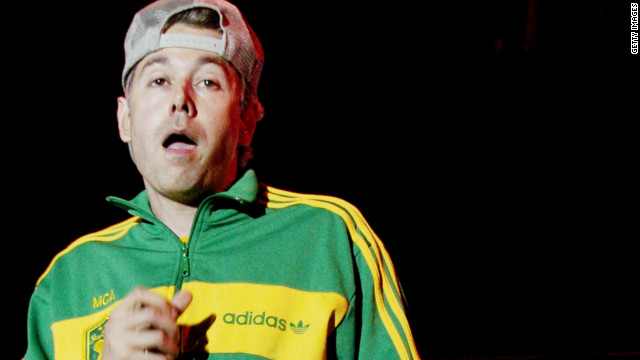
R.I.P: Adam Yauch - 1964-2012


Adam Yaunch, co-founder of inspirational New York hip-hop collective, the Beastie Boys, has lost his battle with cancer. I'm in no way shape or form qualified to elaborate on his achievements as an artist, film producer and activist. This is merely a just a post to share my thoughts on the legacy that's been left from a band who defied all the odds.

I had the pleasure of seeing the Beasties back in 2005 as a part of the Big Day Out as well as their own shown at the Hordern Pavillion in Sydney. Moments throughout that show remain firmly in my mind to this day and for that, I thank them. Obviously MCA" contributed heavily to this.

R.I.P, Adam. My thoughts go out to your surviving family members and close friends.

Obituary at the band's official website.

Simon K.

Wednesday, 25 April 2012

Album of the Week: Bethany Curve - You Brought Us Here


Artist: Bethany Curve
Album: You Brought Us Here
Label: Unit Circle Rekkids
Release Date: September 4, 2001

Shoegaze and dream pop seem to have resurgences in ten year increments. We’re currently going through the third wave right about now, but that’s not what I wish to focus on today. The elusive second wave is today’s focal point.
The origins of these respective genres derived from Britain and somewhere along the line coalesced to form a perfect marriage. It seemed to have taken ten years before American bands started embracing it and tinkering with its template. Three bands spring to mind: Highspire, Experimental Aircraft and Bethany Curve. The latter’s album, You Brought Us Here, is arguably the best produced out of any of these bands (this week, anyway).
You can almost tell the story by the album’s titled. Perhaps a nod of the head in the direction of My Bloody Valentine et al. YBUS isn’t touted as Bethany Curve’s seminal album, however I feel it’s the best representation in what they wished to achieve. Hailing from Santa Cruz, California, Bethany Curve (whose line-up at the time of this album consisted of Richard Mailing – Vocals/Guitar, Nathan Guevara –Guitar, David Mac Wha – Drums, David Lockhart bass/cello) seemed to do away with the psychedelic influences that embellish this particular area of America to adopt more of a sound akin to its trans-Atlantic cousin.
Although a derivative band in many respects, they perform their craft with aplomb. Opener, ‘Long Beach’, is a nice dress rehearsal for what’s to come. The ten minute ‘Ann Illusion’ provides backbone to the album, presenting a post-punk influence under the deep layers of sound that sparsely floats throughout your listening space. ‘Silver’, my favourite on the album, holds a sturdy rhythm section with ear pricking bass lines that the drums struggle to keep pace with, while the melody is Bethany Curve at their height. If ‘Ann Illusion’ is the backbone, then ‘This Fire’ is its perfect foil, with tremolo gushing through more of Mailing’s early eighties influence of post-punk and murky rhythm section.
As the album strides on, the mix appears to get darker, with Bethany Curve leaning towards the sounds that dominated their earlier albums; Gold in particular. ‘Airplanes Down’ is about as brooding as the title suggests, while the ‘Lodge’ provides the perfect closure to the album, allowing the listener to reflect on what they’ve just had the pleasure of consuming.
The second wave of this genre appears to be the forgotten period. As mediocrity took to the main stream throughout the late ‘90s/early 00s, arguably, the only credible band who stood the test of time were Radiohead, who were at the height of their drastic sea change in Kid A. There was a simmering modest independent scene still ticking along - that to this day - still appears distant. Bethany Curve was a part of that and if many took the time to conduct some digging throughout this period, I’m sure they would be compelled with the results.
Bethany Curve Website:  http://www.bethanycurve.com/
By Simon K.

Saturday, 21 April 2012

One To Watch: Breaking Bad - Season Four


The fourth season of Breaking Bad commences the way the third season ended. Many would’ve been picking themselves up off the ground to see whether Jesse Pinkman (played by Aaron Paul) pulled the trigger.
Naturally, there are no happy endings in this thing. True to form, producer Vince Gilligan (helped by Bryan Cranston for the first time throughout the series), didn’t disappoint, heaping misery onto the viewer.
Opening episode, ‘Boxcutter’, produced one of the most gruesome scenes yet, with a certain Gustavo ‘Gus’ Fring (played by Giancarlo Esposito) going to town on one of his soldiers with, indeed, a boxcutter. Fring is also the central figure in yet another defining scene of season four later on in the series.
After this scene, I found the beginning of season four a little meandering, going through the motions in the next two to three episodes. Walter White (played by Cranston) takes measures of protection, which was always going to come at some stage and ‘Thirty Eight Snub’ takes us through this, while Jesse tails with the dark side (not for the first time), leaving his newly acquired home open to anyone who wants to party.
The episode ‘Open House’ sees Marie Schrader (played by Betsy Brandt) pilfering contents from open real estate for sale, feeding her previous addiction of shoplifting due to her husband, Hank (played by Dean Norris),  continuing to wallow in his state of immobility, thanks to the Cartel’s twin assassins taking him down in a local car park (confusing enough?).
It’s not until the back end of episode, ‘Shotgun’, in which things really start to take shape. This is thanks to the consumption of too much red wine from good ol’ Walt. In the company of his family, “Don” White starts rendering his theory as to why Gael Boetticher (played by David Costabile) isn’t Heisenberg: the bane of Hank Schrader’s professional career as the spearhead of the D.E.A. The very reason as to why Hank is cooped up in a wheel chair due to the Cartel’s handiwork, as mentioned above. Prior to Walt’s rant, Schrader thought he had his man.
Naturally, this gets the creative juices of one Hank Schrader well and truly bubbling, leaving the sequence of events to unfold in catastrophic circumstances.
Does this have you intrigued? The above analysis fails to even scratch the surface of the problems greeting the cast of Breaking Bad (I haven’t even mentioned Saul Goodman, played by Bob Odenkirk).
I won’t go on. Just go and grab yourself a copy of one of the most electrifying series since television went to another level thanks to The Wire, The Sopranos and Six Feet Under.
All that’s left to say is this: bring on season five; the final season, according to Bryan Cranston. It can only end one way.
By Simon K.

Wednesday, 18 April 2012

At The Drive-In - Live @ Coachella


Let me start by saying that I love At The Drive-In as much as the next person. I was lucky enough to see them live before their untimely split back in 2001. Thanks Christ to be honest, because watching their performance at Coachella, it left me cold to the marrow. Backdrops and large stages that almost resemble an arena vibe not to mention Omar's enthusiasm or lack thereof. Was this the same band? I'm afraid not. Sailed ships spring to mind.

To put it bluntly, I'm afraid this one's a cash job, folks. I'm glad certain band members kissed and made up because the circumstances surrounding their "hiatus" back in 2001 were ambiguous to say the least. There's an argument as to "why shouldn't they take the cash?" I can totally understand that question.

Seeing so many bands reunite these days is indicative of how much of a lull rock music is experiencing at the moment. Gary Wolsten of Drowned In Sound penned a brilliant article late last year regarding The Stone Roses reunion. Many, including myself, I'm sure, echo similar sentiments.

Regardless of my opinion, some may see some pertinence in ATDI's reunion. If that's the case, enjoy the above video. However, if you managed to be as lucky as I was all those years ago by witnessing one of the last juggernauts of the guitar variety, you may also agree that there's a certain pale in comparison.

Simon K.